Homemade Pine Cleaner with Real Pine Needles and Lemon
If you love the smell of a clean, fresh forest, this one’s for you. My friend Rachael and I whipped up this homemade pine cleaner during one of our “Make It at Home Day” projects. Not only does it smell amazing, it actually works, and it’s free from the harsh chemicals found in most store-bought cleaners.
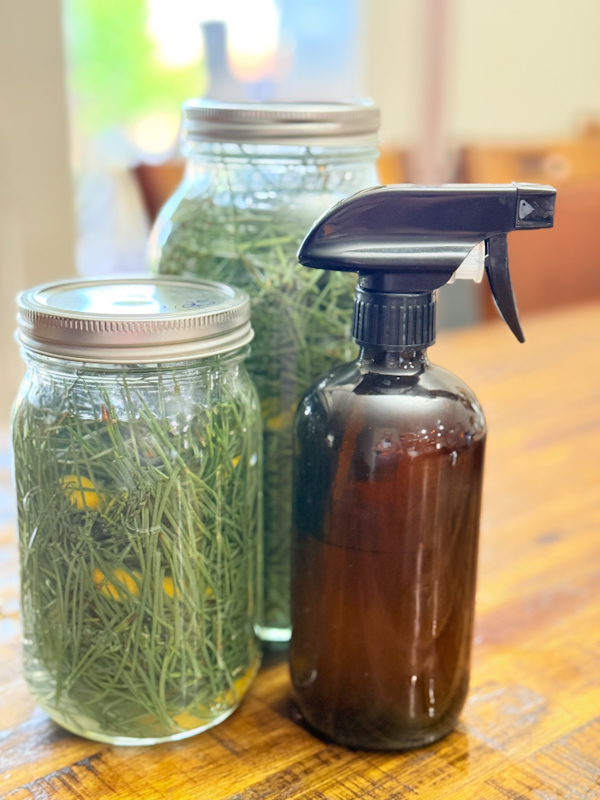
All you need are some fresh pine needles, white vinegar, and lemon slices. That’s it!
Why Store-Bought Pine Cleaners Are Bad for You
Pine-scented cleaners may smell fresh, but many are not as safe as they seem. Here’s what you might find inside:
Formaldehyde
Manufacturers often use this chemical as a preservative to extend shelf life, even though it’s a known carcinogen. A carcinogen is any substance or agent that can cause cancer. Even low-level exposure can irritate your eyes, nose, and throat, while long-term contact has been linked to certain cancers. Despite these risks, many household products still contain it.
Phthalates
Manufacturers use phthalates to make artificial scents last longer. They rarely list them directly on labels, often hiding them under vague terms like “fragrance” or “parfum.” Studies link phthalates to hormone disruption, reproductive problems, and health and developmental issues in children.
Ammonia and Other Strong Solvents
These solvents cut through grease and dirt effectively, but they can burn your eyes, skin, and lungs, especially in poorly ventilated areas. Breathing them in too often can damage your respiratory system over time.
Synthetic Dyes and Fragrances
These are added to make products look and smell nice, but they don’t add any real cleaning power. In fact, they can trigger allergic reactions, asthma, and skin sensitivity, especially in children and those with compromised immune systems.
The Problem with “Natural” Brands
Some brands used to be green and safe. Then, big companies bought them. After that, the ingredients often changed. Cheap and harmful chemicals are added to save money. The cleaner you once trusted may not be the same anymore.
Why I Make My Own DIY Pine Cleaner
When I make it myself, I know what’s in it. No hidden chemicals. No fake scents.Just simple, safe ingredients I trust. DIY cleaning is better for my home and my health. It’s also better for the planet.
Ingredients
- 1 mason jar (quart-size)
- A handful of fresh pine needles
- 1 lemon, sliced
- White vinegar (enough to fill the jar)
Instructions
- Add pine needles and lemon slices to a clean mason jar.
- Fill the jar with white vinegar until the pine needles and lemon slices are fully submerged.
- Seal the jar and store in a cool, dark place for 2–3 weeks. This gives the vinegar time to infuse.
- Strain and pour the liquid into a spray bottle.
- Store in a cool cabinet—lasts up to 6 months.
- Download our printable PDF Flyer.
Where to Use Homemade Pine Cleaner:
Use this cleaner on a variety of household surfaces with confidence. Spray it on the following;
- kitchen counters
- bathroom sinks
- bathtubs
- tile
- ceramic
- glass mirrors
- trash cans
- washing machine
- toilet
- doorknobs and handles
Important:
Make sure you avoid granite, marble, or travertine—vinegar can damage those over time. When using it on unsealed wood, vinegar can dry it out or strip the finish. It also freshens toilets quickly, though it won’t replace a deep scrub.
My Final Thoughts on Making Homemade Pine Cleaner
It’s amazing what you can create with just a few simple ingredients and a little time. This homemade pine cleaner captures the fresh scent of nature, without any mystery chemicals. It’s a small, satisfying way to keep your home clean, safe, and intentional.

Homemade Pine Cleaner
Make your own homemade pine cleaner using real pine needles, lemon, and vinegar. Natural, effective, and chemical-free!
Materials
- 1 mason jar (quart-size)
- A handful of fresh pine needles
- 1 lemon, sliced
- White vinegar (enough to fill the jar)
Instructions
<ul><li>Add pine needles and lemon slices to a clean mason jar.</li><li>Fill the jar with white vinegar until fully submerged.</li><li>Seal and store in a cool, dark place for 2–3 weeks.</li><li>Strain and pour into a spray bottle.</li><li>Store in a cool cabinet—lasts up to 6 months.</li></ul>
-
Whipped Tallow Balm Recipe with a Cozy Fall Scent
Whipped Tallow Balm Recipe with nourishing oils and a cozy fall scent. An easy homemade balm for soft, moisturized skin.
-
25 Must-Know Instant Pot Uses for Homesteaders (Part 5)
Finish the Must-Know Instant Pot Uses series with homemade herbal syrups, easy steamed desserts, helpful FAQs, and practical tips for saving time, money, and food in the kitchen.
-
25 Must-Know Instant Pot Uses for Homesteaders (Part 4)
Discover more practical Instant Pot uses that can save time, reduce food waste, and make everyday cooking easier.
-
Homemade OxiClean Recipe: Easy DIY Stain Remover
Homemade OxiClean Recipe made with simple ingredients to help lift laundry stains and brighten clothes without the high cost.
-
Air Fryer Potato Chips: A Simple Snack
Air Fryer Potato Chips are a simple, crunchy snack made with just potatoes, salt, and a touch of oil. They cook fast, turn perfectly golden, and taste better than anything in a bag. Perfect for after‑school snacking or anytime you want something homemade and crisp.
-
How to Freeze-Dry Herbs in a Harvest Right Freeze Dryer
Learn how to freeze-dry fresh herbs to preserve your garden harvest and enjoy basil, rosemary, and dill year-round.